
How to Store Fresh-Picked Strawberries So They Last All Week
The difference between berries that last a day and berries that last a week comes down to the first hour after picking. Here's exactly how to store them.
Last updated: June 2026

You picked a beautiful flat of strawberries this morning. By Thursday, half of them could be soft, leaky, or starting to grow gray fuzz. Or they could still be firm and sweet, ready for the whole week. The difference comes down to what you do in the first hour after you get home.
Fresh-picked strawberries are softer than the ones from the store. Store berries are bred and chilled to survive a long trip. The ones you pulled off the plant are riper and more tender, so they spoil faster. The good news is that keeping them fresh is easy once you know a few simple rules. Here's how to do it.
Storage at a Glance
| Storage method | Expected freshness | Best for |
|---|---|---|
| Counter, unwashed | Same day | Best flavor if eating today |
| Fridge, dry, sorted, loosely covered | 5 to 7 days | Fresh eating through the week |
| Fridge, washed first | 1 to 3 days | Only if eating soon |
| Cut strawberries | 2 to 3 days | Toppings, snacks, meal prep |
| Frozen | 8 to 12 months | Smoothies, jam, baking |
What to Do With Strawberries After a U-Pick Trip
If you just came home with more berries than you meant to pick, handle them in this order:
| When | What to do | Why it matters |
|---|---|---|
| At the farm | Keep berries shaded, not sealed in a hot car | Heat shortens shelf life fast |
| Drive home | Use a cooler or keep them in the cabin, not the trunk | Prevents sweating and softening |
| First 30 minutes home | Sort out bruised or leaking berries | One bad berry spreads mold |
| Same day | Eat the softest berries first | These will spoil fastest |
| Within 5 days | Freeze extras before they get soft | Freezing works best while berries are firm |
The One Rule That Matters Most: Don't Wash Them Yet
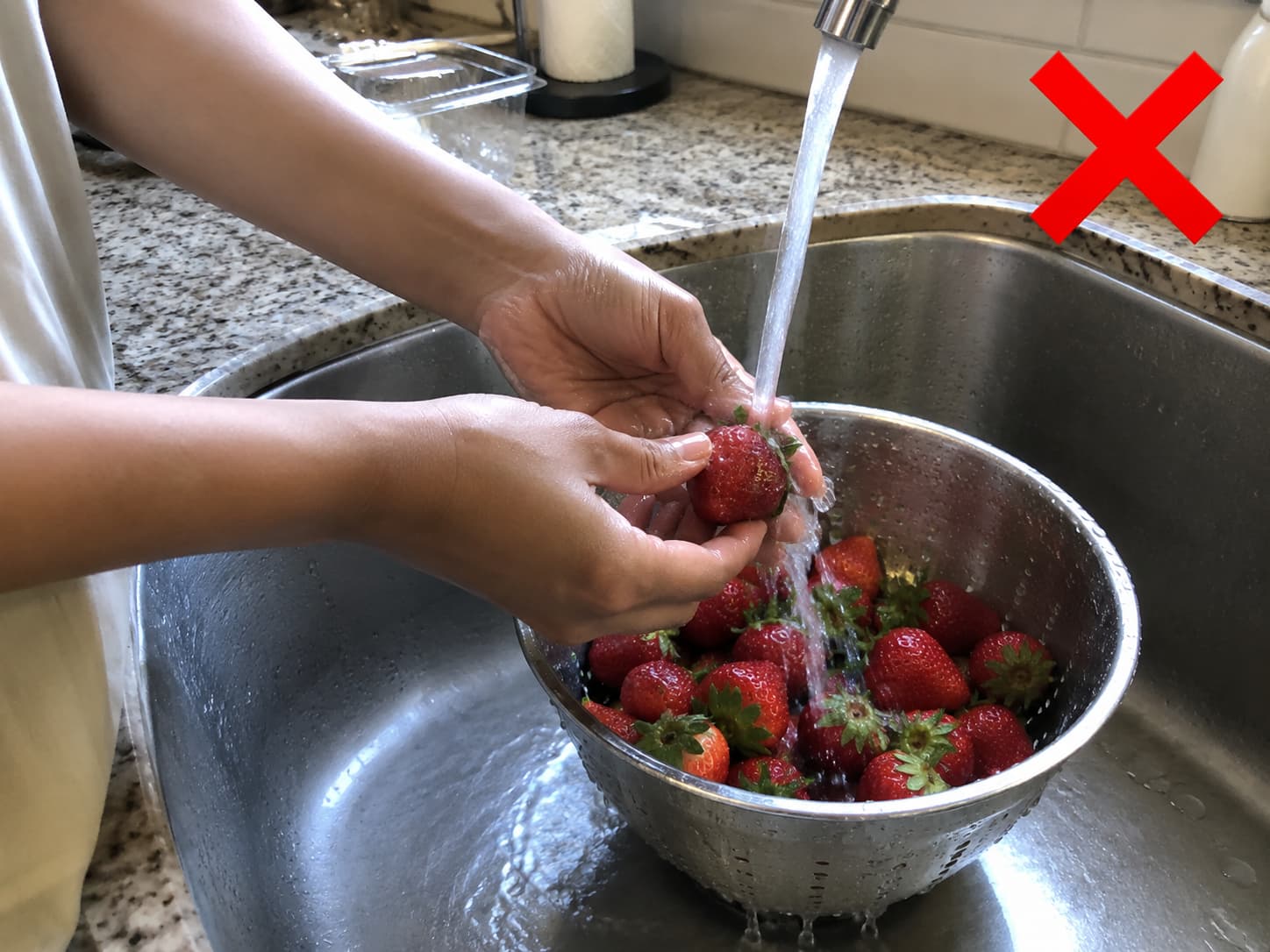
Do not wash strawberries before storing them. Keep them dry in the fridge, then rinse only the berries you are ready to eat.
If you only remember one thing, remember this. Don't wash strawberries until you're ready to eat them.
Strawberries soak up water like a sponge. Wet skin gets soft, and that damp surface is exactly what mold needs to grow. A berry you wash and then put back in the fridge will go bad much faster than a dry one. So when you get home, don't rinse the whole batch. Just wash the few you're about to eat, right before you eat them.
How to Store Strawberries in the Fridge, Step by Step
Here's the whole thing, start to finish:
- Sort them first. Tip the berries gently onto a clean towel and look them over. Pull out any that are bruised, soft, leaking, or have even a spot of mold. One bad berry can spread mold to the ones next to it fast, so this quick step protects the whole batch.
- Leave them dry and whole. Don't rinse them. Don't cut them. Don't pull off the green tops. A whole berry with its cap on stays good longer.
- Line a container with a paper towel. Use a wide, shallow container, not a deep pile. The paper towel on the bottom soaks up extra water, which is what makes berries go bad.
- Lay them in one layer if you can. Berries stacked deep crush the ones on the bottom. One loose layer is best. Grab a second container if you picked a lot.
- Don't seal it tight. A little air keeps moisture from building up inside. A sealed, airtight box traps wet air and makes berries rot faster. Leave the lid cracked open, or use a container with a few holes. The plastic clamshell from the store works great for this.
- Get them in the fridge fast. The best spot is the crisper drawer. It holds in the humidity that keeps berries plump and firm. If your drawer has a humidity slider, set it high. No crisper drawer or humidity control? The back of a low shelf is the next best spot. Just keep them out of the door, where the temperature jumps around every time you open the fridge.
That's it. Sorted, dry, one layer, not sealed tight, and cold. Do those five things and your berries go from a two-day flat to a full week of good eating.
Best Containers for Fresh Strawberries
| Container | Good or bad? | Why |
|---|---|---|
| Original vented clamshell | Good | Allows airflow |
| Shallow container with cracked lid | Good | Prevents moisture buildup |
| Airtight plastic container | Bad | Traps wet air |
| Deep bowl | Bad | Crushes berries at the bottom |
| Paper towel-lined tray | Best | Absorbs moisture and prevents crushing |
How Long Do Fresh-Picked Strawberries Last?
With the steps above, here's what to expect:
- On the counter: same day only. Fine if you'll eat them today, risky after that.
- In the fridge, stored right: 5 to 7 days when the berries are fresh-picked, sorted, dry, loosely covered, and kept cold.
- In the fridge, washed first: 1 to 3 days. This is the most common mistake people make, especially if the berries go back into the fridge damp.
- Cut strawberries: 2 to 3 days in a covered container in the fridge.
- In the freezer: 8 to 12 months for best quality (more on that below).
The U.S. Food and Drug Administration says to keep fresh produce like strawberries at 40 degrees or colder. Fresh-picked berries start out riper than store berries, so treat these numbers as a best case, not a promise. Check on them every day and eat the softest ones first.
Get Them Cold Fast
The sooner you get your strawberries cold, the longer they will last. That's why a cooler with ice packs in your car is worth it on the drive home, especially in summer. A flat of berries sitting in a hot trunk for an hour can lose days of shelf life before you even get to the kitchen.
Here's one thing not to do: don't leave strawberries on the counter "to ripen." Peaches and bananas keep ripening after you pick them. Strawberries don't. They only get softer and older. What you picked is as sweet as it's going to get, so your only job is to slow it down with cold.
One bonus tip for flavor: cold berries taste less sweet, because the cold mutes their smell and taste. So if you're about to eat them, take them out of the fridge and let them sit on the counter for about 30 minutes first. They'll taste noticeably better at room temperature.
Does the Vinegar Bath Really Work?
You've probably seen the tip about soaking berries in a mix of vinegar and water to kill mold and make them last longer. It's all over the internet, and plenty of people swear by it.
But the science is shaky. A berry expert at Driscoll's, one of the biggest strawberry growers in the country, says the proof is weak, partly because the vinegar in your kitchen is more watered-down than the kind used in lab tests. On top of that, a vinegar bath puts you right back against the number one rule: it gets the berries wet. If you do try it, you have to dry them all the way afterward, gently, with a towel or a salad spinner, before they go in the fridge. Wet berries from a vinegar rinse go bad just as fast as wet berries from a plain rinse.
The bottom line: for most people, just keeping the berries dry and unwashed until eating is easier and works fine. The vinegar trick is optional, and it may not do much.
How to Save Limp Strawberries
Caught your berries going a little soft, but they're not spoiled yet? You can often bring them back. Drop the soft-but-okay berries into a bowl of cold water with a few ice cubes for 5 to 10 minutes. They'll soak up a little water and firm back up. This only works on berries that are just tired, not ones that are mushy, leaking, or growing mold. Eat them right after, since now they're wet. It's a good way to save berries that were headed for the smoothie pile anyway.
Picked Way Too Many? Freeze the Extras
Almost everyone picks too much. It's the most common u-pick regret: a big, beautiful flat that's more than one family can eat in a week. The fix is the freezer. Frozen strawberries keep their best quality for 8 to 12 months and are perfect for smoothies, baking, jam, and sauce.
Freezing works a little differently from fridge storage, with its own steps to keep the berries from freezing into one solid clump. We walk through it in our guide to freezing strawberries. The short version: freeze what you can't eat fresh in about five days, and do it while the berries are still firm, not when they're already on their way out.
How to Tell When to Toss Them
Even with perfect storage, every berry has a limit. Before you eat one that's been in the fridge a few days, give it a quick check. Mold is the easy one to spot, but berries also go bad in quieter ways: a mushy feel, a sour or funky smell, leaking juice, or a slimy surface. When in doubt, throw it out. And always pull out a moldy berry right away so it doesn't take its neighbors down with it.
For the full list of warning signs, see our guide on how to tell if strawberries are bad.
The Bottom Line
Storing fresh strawberries comes down to one simple idea: keep them dry and keep them cold. Sort out the bad ones, leave the rest unwashed in a shallow, loosely covered container, get them in the crisper drawer fast, and wash only what you're about to eat. Do that, and a morning of picking will feed you all week.
Heading out to pick more? Our complete strawberry picking guide covers what to bring and how to choose the ripest berries, and you can find strawberry farms near you in our directory. Not sure if your local farms are open yet? Check our strawberry picking season by state guide.
Storing Strawberries FAQ
Should you wash strawberries before storing them?
No. Washing adds water that softens the berries and helps mold grow. Keep them dry and unwashed, and rinse only the berries you're about to eat, right before you eat them.
How long do fresh-picked strawberries last in the fridge?
Stored right, dry and unwashed in a shallow, loosely covered container, most fresh-picked strawberries last 5 to 7 days. Washed or sealed while wet, they often last only 2 to 3 days.
Should strawberries be stored in an airtight container?
No. An airtight container traps wet air and makes berries rot faster. Use a container with a little airflow, like a vented clamshell or a lid left slightly open, with a paper towel on the bottom to soak up moisture.
Do strawberries need to be refrigerated?
Yes, if you want them to last more than a day. Fresh-picked strawberries only keep about a day on the counter. Put them in the crisper drawer and get them cold as soon as you can after picking. The FDA recommends keeping them at 40 degrees or colder.
How do you revive limp strawberries?
Soak the soft-but-okay berries in a bowl of cold ice water for 5 to 10 minutes. They'll soak up a little water and firm up. Eat them right after. This only works on tired berries, not ones that are already mushy or growing mold.